Lesson 7 Diphthongs oʊ, ɔɪ, au, ai, ei
In this lesson, we delve into a crucial aspect of spoken English: diphthongs. Diphthongs are unique vowel sounds that glide from one vowel quality to another within a single syllable. Derived from the Greek word meaning “two sounds,” a diphthong is a blend of two vowel sounds in a single syllable.
Diphthong oʊ
Drop the jaw quite a bit and then round the lips.
Examples:
go, no, so, show, home, hope, road, boat, coat, phone, stone, joke, open, close, both
Sentences
- I need to go to the store before it closes.
- She said no because she already had plans.
- It started to snow heavily in the morning.
- Can you throw me the keys?
- Joe forgot his phone at home again.
- We sat by the window and watched the rain.
- This road is always busy during rush hour.
- He told a joke, but no one laughed.
- Let’s make some toast for breakfast.
- I hope we can meet up this weekend.
Diphthong ɔɪ
Begin with an open mouth and slightly rounded lips (like in “aw”), then glide into a tight “ee” shape.
Examples:
boy, toy, joy, enjoy, coin, noise, voice, choice, oil, boil, join, point, foil, spoil, loyal
Sentence Practice:
The boy is playing outside.
She bought a new toy.
That news brings me joy.
I really enjoy this movie.
I found a coin on the street.
The noise was loud.
Her voice is beautiful.
It’s your choice to make.
Don’t boil the water yet.
He is a loyal friend.
Diphthong aʊ
To pronounce the /aʊ/ sound correctly, connect the /ɑ/ sound to /ʊ/ with a smooth, gliding movement. Open your mouth very wide for the /ɑ/ sound.
Examples:
now, how, cow, house, mouth, down, town, sound, cloud, loud, about, around, shout, out, found
Sentence Practice:
I want it now.
How are you today?
The cow is in the field.
We live in a small house.
Close your mouth when you eat.
He fell down the stairs.
Let’s go into town.
I like the sound of that idea.
Look at that cloud.
I found a dollar on the floor.
Diphthong aɪ
To pronounce the /aɪ/ sound correctly, connect the /ɑ/ sound to /ɪ/ with a smooth, gliding movement. Open your mouth very wide for the /ɑ/ sound.
Examples:
I, my, try, buy, why, high, sky, fly, night, right, light, time, kind, find, cry
Sentence Practice:
I love learning English.
This is my favorite book.
Can you try again?
I want to buy a gift.
Why is he late?
The mountain is very high.
The stars are in the sky.
Watch the birds fly.
It’s late at night.
Please turn on the light.
Diphthong eɪ
Begin with an “eh” sound (as in “bed”), then glide into a tense “ee” sound.
Examples:
day, say, they, may, play, name, game, same, take, make, rain, wait, late, date, face
Sentence Practice:
What day is it today?
What did you say?
They are very friendly.
You may sit here.
Let’s play outside.
What’s your name?
This game is fun.
It’s the same every day.
I will take a break.
Don’t be late for school.
Find the Sounds
1. Find /eɪ/
- make
- friend
- wait
- get
- replace
- said
- café
- great
- met
- train
2. Find /aɪ/
- like
- sit
- knight
- give
- time
- bright
- live
- cycle
- chief
- height
3. Find /ɔɪ/
- join
- now
- point
- boat
- voice
- enjoy
- oil
- loud
- toy
- choice
4. Find /oʊ/
- home
- hot
- boat
- book
- slow
- though
- law
- phone
- grow
- caught
5. Find /aʊ/
- house
- know
- food
- mouth
- down
- low
- sound
- about
- found
- thought
Answers
Answer Key
- /eɪ/: make, wait, replace, café, great, train
- /aɪ/: like, knight, time, bright, live (adj.), cycle, height
- /ɔɪ/: join, point, voice, enjoy, oil, toy, choice
- /oʊ/: home, boat, slow, though, phone, grow
- /aʊ/: house, mouth, down, sound, about, found
Read and Discuss
Imagine this situation:
You’re really passionate about something — maybe drawing, singing, sports, or starting your own business. But someone you admire (a parent, a friend, a teacher) tells you you’re “not good enough” or that it’s unrealistic.
How would you feel? Would you keep going? Why or why not?
Follow-up questions:
Why do you think people sometimes discourage others from following their dreams?
Have you ever experienced something like this? How did you respond?
Do you think people should always follow their dreams no matter what? Why or why not?
Look at these images and discuss them.
- Have you watched this movie?
- Discuss what you can see in each image.
- What assumptions can you make about the plot of the movie based on the images?

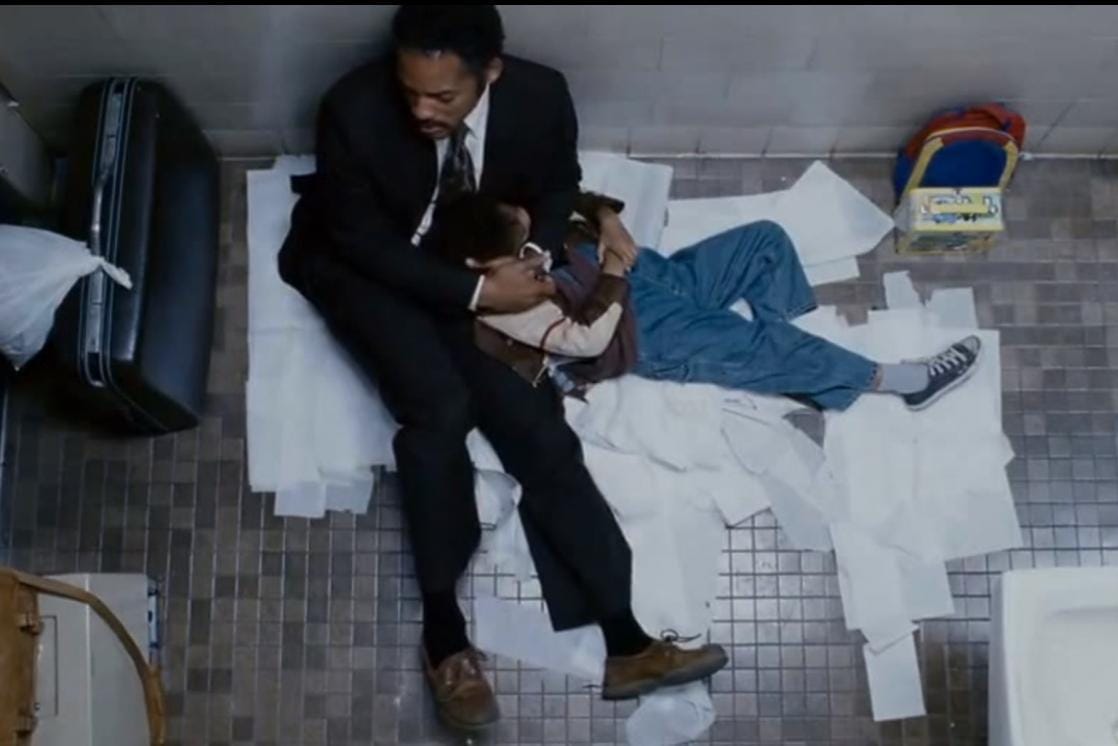

Listening Practice The Pursuit Of Happyness
Share you ideas
What kind of challenges does the main character (Chris) face in his life? If you haven’t watched the movie, try to guess from the short scene.
Have your parents or someone close to you ever told you not to do something you believed in?
What does this scene tell us about how adults can influence children?
Do you think it’s possible to achieve success if nobody believes in you? Why?
What qualities make someone truly strong — physical strength or mental strength?
The pursuit of happiness (office scene)
The pursuit of happiness (office scene)
Exchange your thoughts
- What challenges does Chris face before and during the interview?
Consider his attire, recent experiences, and emotional state. - How does Chris address his unconventional appearance during the interview?
What does his response reveal about his character and communication skills? - What qualities does Chris exhibit that make a positive impression on the interviewers?
- How does the interview panel respond to Chris’s situation and demeanor?
What does this suggest about their values and the company’s culture? - Discuss the significance of the line: “He must have had on some really nice pants.”
- In what ways does this scene highlight the importance of perseverance and resilience?
How can these traits influence one’s professional journey? - Reflect on a time when you faced a daunting (frightening) situation.
How did you handle it, and what did you learn from the experience?* Daunting – something that feels intimidating, difficult, or overwhelming—not necessarily frightening, but enough to make you hesitate or feel nervous.