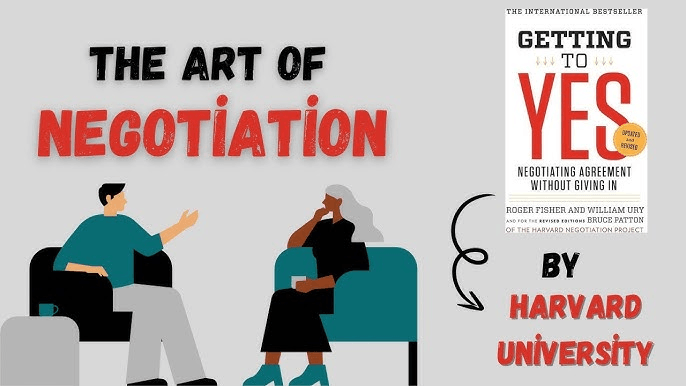
HARVARD Negotiators: How to Get What You Want
Expressing agreement
Check what phrases students can remember to show agreement. Then read some more variants.
That sounds so true.
I definitely/partly/completely/ absolutely agree with that.
That makes sense (to me).
I think that’s pretty accurate.
That seems like a good point.
That’s a fair statement.
That’s exactly how I feel about it.
I’d go along with that.
This is a valid point.
- I find this statement convincing.
Interesting facts about the Harvard Negotiation Project:
It’s based on “principled negotiation,” not tricks
Harvard negotiators focus on interests, not positions. Instead of arguing over what people say they want, they dig into why they want it—often revealing win-win solutions.Developed during the Cold War
The Harvard Negotiation Project began in the 1970s, partly to improve negotiation between hostile parties during intense global conflict—ideas later adapted for business, family, and everyday life.“Getting to Yes” is one of the most influential negotiation books ever
Written by Roger Fisher and William Ury (Harvard Law School), the book has been translated into 40+ languages and is used by diplomats, CEOs, and mediators worldwide.BATNA is the real source of power
Harvard negotiators argue that your strongest leverage isn’t persuasion—it’s your Best Alternative To a Negotiated Agreement (BATNA). The better your alternative, the more confident and effective you are at the table (i.e. the best option you have if the negotiation fails, in simple terms: “What will I do if we don’t reach an agreement?”).Separating people from the problem improves results
One of their core insights is that emotions, ego, and relationships often derail negotiations. By treating the problem objectively while respecting the people, outcomes improve dramatically.
Listening practice
Situation analysis
1. Salary Negotiation (Work)
Situation:
You are offered a job with a salary of $1,000, but you hoped for $1,300. Another company may respond next week, but you are not sure.
BATNA:
Waiting for the other job offer or staying in your current job.
Possible Solution:
Negotiate politely. Ask for a higher salary or extra benefits (flexible hours, more vacation). If the employer refuses and the offer is below your BATNA, walk away.
2. Apartment Rental (Life situation)
Situation:
You like an apartment, but the rent is higher than your budget. The landlord says many people are interested.
BATNA:
Renting another apartment or staying in your current place.
Possible Solution:
Negotiate for a lower rent or a longer contract. Offer to pay earlier or sign a 1-year lease. If the landlord doesn’t agree, choose your BATNA.
Family Negotiation (Emotions involved)
Situation:
You want to spend holidays one way, but your family wants something different.
BATNA:
Spending part of the holidays separately or joining later.
Possible Solution:
Stay calm and explain your needs. Suggest a compromise, such as splitting the time or choosing a place everyone likes.
Discuss the questions:
Which answer do you agree with most? Why?
Which BATNA is weakest? Which one is strongest?
How would you change the answers to make it stronger?